
The Temple
Mallikarjuna Temple at Srisailam, Andhra Pradesh, is the second of the 12 Jyotirlingas and uniquely holds dual sacred status: it is both a Jyotirlinga (Lord Shiva as Mallikarjuna) AND one of the 18 Maha Shakti Peethas (Goddess as Bhramaramba). No other site in India holds both of these honours. The temple is situated atop the Nallamala Hills on the banks of the Krishna River, deep in a protected forest — creating a mystical, remote spiritual atmosphere. "Mallika" means jasmine, "Arjuna" means white/brilliant. Shiva here is the Lord who is white as jasmine — representing pure divine light.

The Sacred Story
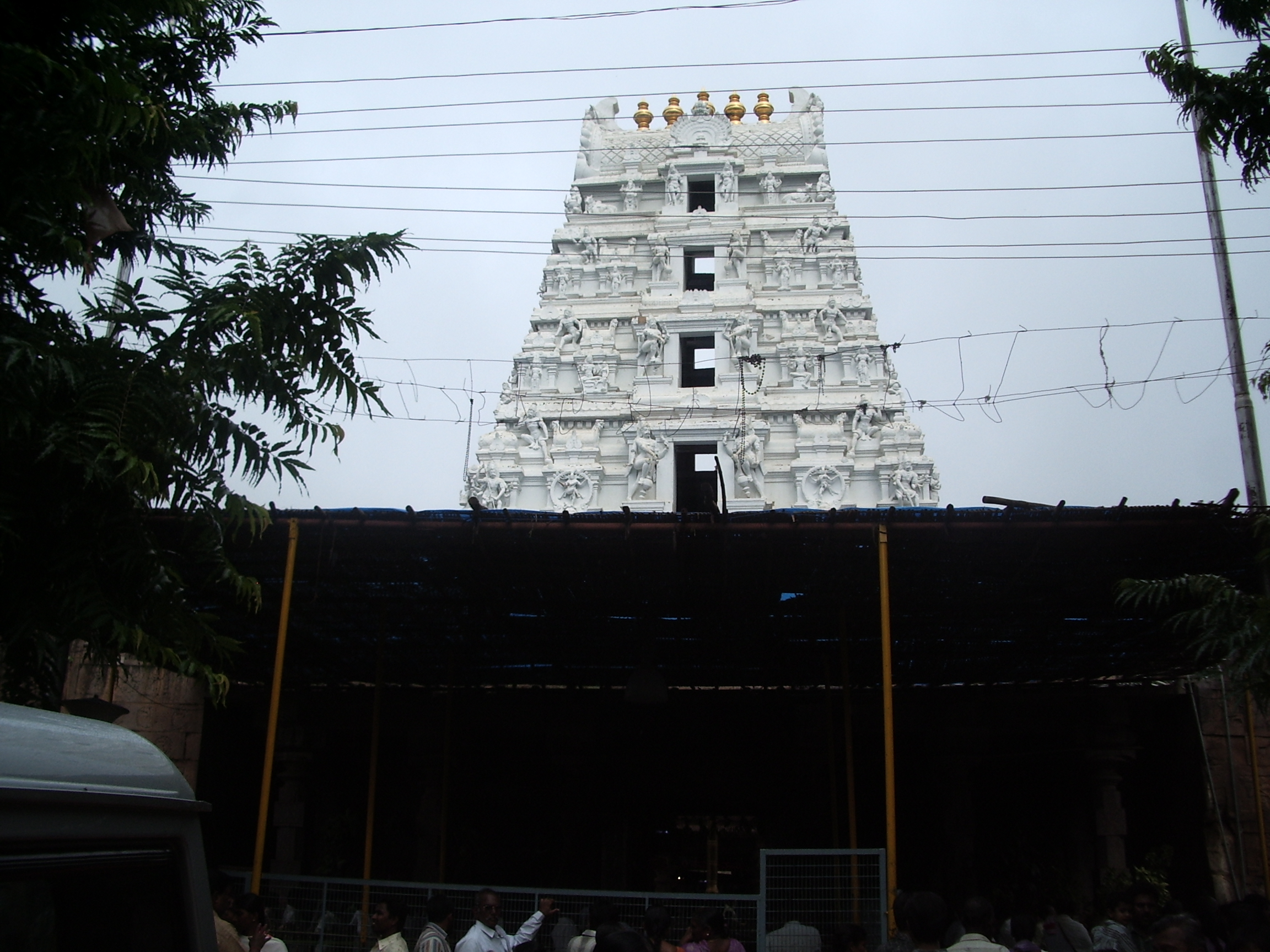
Where Jyotirlinga and Shakti Peetha unite — the only dual sacred site in all of India
Jyotirlinga and Shakti Peetha in a Single Precinct: The World's Unique Maha Kshetra
Srisailam is the only unique, miraculous site in India where a Dwadasa Jyotirlinga (Lord Mallikarjuna Swamy) and an Ashtadasa Maha Shakti Peetha (Goddess Bhramarambika Devi) are located in exactly the same temple complex. The sacred land where the Krishna River flows as 'Patala Ganga' is woven with divine leelas from many eras, the sacrifices of ardent devotees, and profound historical events.
Part 1: Mythological Events (Divine Leelas & Origin of the Kshetra)
The origin of Srisailam is rooted in awe-inspiring tales of the gods. The very mountain itself is considered an embodiment of the divine.
1. Sage Parvatha's Penance: The Devotee Who Became a Mountain
In ancient times, a great sage named 'Shilada' had two sons: Nandi and Parvatha. Among them, Nandi performed severe penance for Lord Shiva and was blessed to become the Lord's eternal mount (Nandeeshwara). Seeing his brother's great fortune, Parvatha resolved that he too must serve Shiva. Following strict austerities, bearing harsh rain and scorching sun, he performed intense penance for years.
When Lord Shiva, melted by his devotion, appeared and asked him to choose a boon, Parvatha said: "O Lord! My brother Nandi became your vehicle. I pray that you grant me the eternal fortune of carrying You, Your consort, the Pramatha Ganas, and all the three crore deities upon my very body. My body must become your permanent abode." Agreeing to this, Shiva blessed Parvatha to transform into a massive mountain on earth. That devoted Parvatha became the mountain ranges of the Nallamala forests. Because Shiva took residence on this sacred mountain, it appropriately earned the name "Sri-Sailam" (The Auspicious Mountain).
2. Kartikeya's Anger - Manifestation of Mallikarjuna
One day on Mount Kailash, Lord Shiva and Goddess Parvati called their sons, Ganesha and Kartikeya (Subrahmanyeshwara), and laid down a condition: "Whoever circumambulates the universe first will be the first to get married." Immediately, Kartikeya mounted his peacock vehicle and set off at lightning speed to circle the worlds. However, Ganesha, using his supreme wisdom, simply circumambulated his parents (the source of creation) three times, earning the merit of circling the three worlds and winning the competition. He was subsequently married to Siddhi and Buddhi.
When Kartikeya returned exhausted from his cosmic journey and learned of this, he felt intense anger and sorrow. Upset with his parents, he left Kailash and went alone to the "Krauncha Mountain" (the Srisailam region) on earth. Unable to bear the separation from her son, Goddess Parvati, along with Lord Shiva, descended to earth. They settled on the Srisailam mountain and tried to pacify Kartikeya. Here, Goddess Parvati is named 'Mallika' and Lord Shiva is named 'Arjuna'. Together, they manifested as a single Swayambhu (self-manifested) Jyotirlinga. Thus, the Lord's name firmly became "Mallikarjuna Swamy".
3. Slaying of Arunasura - The Fierce Form of Goddess Bhramarambika
During the Krita Yuga, a demon named 'Arunasura', driven by the greed to conquer the gods, performed severe penance for Lord Brahma while chanting the Gayatri Mantra. When Brahma appeared, the demon secured a boon: "I must not face death by anyone with two legs (humans/gods) or four legs (animals)."
Intoxicated by the arrogance of this boon, he invaded the three worlds and began brutally torturing the gods and sages. All the gods sought refuge in Shiva and Parvati. Then, Goddess Parvati (Adi Parashakti) assumed a completely novel form. Bypassing the two-legged and four-legged condition, she chose the form of six-legged bees (Bhramara). In a split second, she transformed into a terrifying swarm of billions of bees and attacked Arunasura with a deafening roar. The bees stung the demon's body, drained his blood, and killed him in mere moments. Because she destroyed the demon in the form of bees and saved the worlds, the Goddess became famous here as "Bhramarambika Devi". It is highly significant that this is also the Ashtadasa Shakti Peetha where Goddess Sati's neck portion fell.
Part 2: Devotees' Stories (Local Legends)
These are the miraculous events within the dense Nallamala forests where ordinary devotees and voiceless creatures became one with God.
1. Princess Chandravathi - Kapila Cow's Milk Abhishekam
During the Puranic era, there was a king named Chandragupta. His daughter was Princess Chandravathi. Renouncing royal luxuries, she went to live in a small hermitage in the Srisailam forests seeking peace of mind. Among her herd of cows, there was a black cow (Kapila Govu). Every day, the cow would go to graze in the forest, but upon its return in the evening, there would not be a single drop of milk in its udder.
Suspicious, Chandravathi secretly followed the cow one day. Deep in the thick bushes, the cow stopped at a specific spot. There was a black stone Shiva Lingam (Swayambhu) emerging from the earth. Chandravathi witnessed with her own eyes the Kapila cow lovingly standing over the Shiva Lingam and voluntarily showering its milk as an Abhishekam. She was moved to tears by the devotion of this voiceless creature. She immediately cleared the bushes, brought out the Lingam, and began worshipping it every day with pure jasmine flowers found in the forest. Because He received worship with jasmine (Mallika) flowers, the name 'Mallikarjuna' gained even more meaning.
2. Story of Chenchu Lakshmi - Son-in-law of the Forest Children
The 'Chenchus', a tribal community living in the Srisailam forests for ages, have an unbreakable, blood-deep bond with the Lord. Once, Lord Shiva, separated from Goddess Parvati, was roaming these forests hunting animals in the guise of an ordinary Kirataka (hunter).
At the same time, Goddess Parvati took birth in this forest as a tribal girl (Chenchu Lakshmi). Shiva, in his hunter disguise, saw her and fell in love at first sight. He approached the Chenchu elders to ask for her hand in marriage. They agreed and grandly celebrated the wedding of Shiva and Chenchu Lakshmi. Therefore, the Chenchus lovingly call the Lord "Chenchu Mallayya" and consider Him their very own son-in-law. Even today, during the Maha Shivaratri festivals, the Chenchus hold immense importance and special rights in the special prayers and palanquin services performed for the Lord in the inner sanctum.
Part 3: Historical Events (The God Worshipped by Kings)
From ancient mythology to recorded history, countless emperors have sought the feet of Mallikarjuna to wash away their sins and expand their kingdoms.
1. Lord Rama in Treta Yuga - Pandavas in Dwapara Yuga
During the Ramayana era (Treta Yuga), Ravana was a great Shiva devotee and a Brahmin. Lord Rama incurred the supreme sin of 'Brahmahatya Patakam' for killing him. History dictates that to attain liberation from this sin, Lord Rama and Sita reached Srisailam, personally installed "Sahasra Lingas" (a thousand Shiva Lingas) here, and worshipped them. Similarly, during their forest exile in the Dwapara Yuga, the Pandavas came to Srisailam along with Draupadi. Here, the five brothers installed five Shiva Lingas in a special enclosure. We can still worship them today as the 'Pandava Prakaram' in the temple.
2. Chhatrapati Shivaji's Penance - The Bhavani Sword
The most famous historical event in Srisailam's history is the visit of the Maratha warrior Chhatrapati Shivaji Maharaj. In the year 1677, Shivaji visited Srisailam as part of his southern conquest. Captivated by the peaceful environment and divine energy here, he abandoned all thoughts of his kingdom and everything else, remaining in deep meditation (Samadhi state) near the Goddess's temple.
Historical accounts say that Goddess Bhramarambika, immensely pleased with his devotion and his absolute commitment to protecting Dharma, personally appeared and presented Shivaji with the famous and invincible "Bhavani Khadgam" (Bhavani Sword). It was with that divine power that he returned and established Dharma. Shivaji built a tall, incredibly spacious northern Gopuram for Lord Mallikarjuna Swamy here. It is still called the 'Shivaji Gopuram' today. The 'Shivaji Spoorthi Kendram' (Shivaji Inspiration Center) now stands at the very spot where he meditated.
Timeless Architecture

Srisailam Maha Kshetra Construction History: Shiva Devotion Carved in Stone
Srisailam was primarily built in the Dravidian architectural style. The Mallikarjuna Swamy Lingam in the sanctum sanctorum is a Swayambhu (self-manifested) not carved by anyone. However, the massive temple surrounding that Lingam took shape over many centuries.
1. Ancient Period: Satavahanas and Ikshvakus (1st - 3rd Century CE)
Based on historians and inscriptions, the earliest historical evidence of Srisailam is found during the Satavahana period. There is a clear mention of "Sri Parvatam" (Srisailam) in the Nasik inscription of the Satavahana King Gautamiputra Satakarni, dating back to the 2nd century CE. Later, the Ikshvakus, Pallavas, Vishnukundinas, and Chalukyas laid the foundation for initial constructions by donating numerous lands and villages to this temple.
2. Period of Kakatiyas and Reddy Kings (13th - 14th Century CE)
During this period, the appearance of the Srisailam temple began to change completely. Many facilities were provided so devotees could easily reach this temple located in a dense forest.
- ✦Kakatiya Prataparudra: Apart from offering many golden ornaments to the Lord, he streamlined the temple administration.
- ✦Prolaya Vema Reddy (Reddy Kings): The greatest structure built by them in Srisailam is the "Steps to Patala Ganga." He constructed magnificent stone steps on a highly difficult steep hill terrain to descend from the hilltop temple down to the Krishna River (Patala Ganga) for holy baths.
- ✦Anavema Reddy: He built the "Veera Shiro Mandapam" in the Lord's temple in 1377 CE. In the past, the Veera Saiva custom of offering body parts to God took place here.
3. Vijayanagara Empire: The Golden Age (14th - 16th Century CE)
The Vijayanagara period is considered the golden age in the history of the Srisailam temple. The vast form of Srisailam we see today was built by them.
- ✦Harihara Raya (II): In 1404 CE, he built the spacious "Mukha Mandapam" (Southern Gopuram) in front of the Lord's sanctum.
- ✦Sri Krishnadevaraya (1516 CE): After his victory in the Kalinga war against the Gajapatis, Sri Krishnadevaraya personally visited Srisailam. He built the tallest "Rajagopuram" on the eastern side of the temple. Similarly, he constructed expansive "Salu Mandapamas" (Pillared Halls) around the temple for devotees to rest.
4. The Magnificent Outer Temple Wall (The Great Prakaram Wall)
The most unique feature of Srisailam's temple architecture, unseen anywhere else in the country, is its Prakaram wall (Outer Wall). This was built during the Vijayanagara period. This wall was built with massive stones, measuring approximately 212 feet in width, 275 feet in length, and 20 feet in height. Specialty: Thousands of wondrous sculptures are carved into this wall. Elephants, horses, Shiva Leelas, Kiratarjuniyam, Markandeya Charitra, and the wedding scenes of Shiva and Parvati are carved into the stone as if bringing them to life. Viewing this feels like a mini-museum.
5. Maratha Period: Chhatrapati Shivaji (1677 CE)
As part of his southern conquest, Chhatrapati Shivaji Maharaj visited Srisailam. By then, the temple had lost some patronage due to attacks by Mughals and Bahmani Sultans. Shivaji came here and undertook the temple's restoration. He built a large Gopuram on the northern side of the temple. Today, we call that the "Navaratna Gopuram" or "Shivaji Gopuram". He appointed specific officials for temple administration and ensured festivals were celebrated grandly again.
6. Modern Era
After independence, the temple developed further under the Endowments Department. The construction of roads, the dam, a ropeway to Patala Ganga, and guesthouses were built, making it accessible and convenient for millions of devotees today.
Revealing the Mysteries
Discover the fascinating secrets and divine phenomena of this sacred temple
The Only Dual Shrine: India has 12 Jyotirlingas and 18 Maha Shakti Peethas. However, Srisailam is the only temple complex where both (Mallikarjuna Jyotirlinga and Bhramarambika Shakti Peetha) coexist. This is an extremely rare combination in the Hindu spiritual world.
Touch the Divine (Sparsha Darshanam): Only in a very few temples in our country, like Kashi and Rameswaram, do devotees get the chance to directly touch the presiding deity. At Srisailam, every ordinary devotee, regardless of caste, religion, or class, can enter the inner sanctum and personally touch the Shiva Lingam to perform pujas.
The Humming Wall: It is said that the Goddess manifested as Bhramarambika after slaying Arunasura in the form of bees. Even today, if one places their ear carefully against the stone wall behind the Bhramarambika Devi sanctum, they can clearly hear the humming sound of hundreds of bees flying inside. This remains an unsolved mystery even to science.
Sakshi Ganapati (The Record Keeper): The first temple devotees must visit upon reaching Srisailam is 'Sakshi Ganapati'. Here, Lord Ganesha is seen holding a book and a pen. It is a strong belief that he writes down the details of every devotee who visits and the pujas they perform, acting as a witness (Sakshi) to Lord Shiva. The pilgrimage is considered incomplete without his darshan.
No Rebirth (Sikhareswaram): There is an area called 'Sikhareswaram' on a high hill near the main temple featuring a Nandi statue. According to scriptures, if one looks through the gap between the two horns of this Nandi and views the main Vimana Gopuram (Sikharam) of the Srisailam temple below, all their sins are destroyed, ensuring no rebirth ('Srisaila Sikharam Drushtva Punarjanma Na Vidyate').
Paladhara - Panchadhara: The Jagadguru Adi Shankaracharya performed penance here at 'Paladhara-Panchadhara', where five pure streams of water flow continuously from inside the hills. Sitting right here, he composed the famous 'Sivanandalahari' praising Lord Shiva and certain slokas from 'Saundaryalahari' praising the Goddess.
Tribal Rights: Usually, only Brahmins serve as priests. However, during the special pujas in the inner sanctum on Maha Shivaratri, the local 'Chenchu' tribals have the exclusive right to tie the turban around Lord Mallikarjuna. Because Lord Shiva is their son-in-law (Chenchu Mallayya), they have exercised this right for generations.
The Deep River (Patala Ganga): Usually, temples are located on river banks. But here, while Srisailam is perched on the hill, the Krishna River flows deep down in the valley. Because devotees have to descend over 800 steps to reach the river for holy baths, it earned the name 'Patala Ganga'.
✨ Each mystery reveals the divine presence within these sacred walls ✨
Explore All 12 Jyotirlingas
Twelve temples of divine light, spread across India — each a self-manifested Shiva Lingam.




← Swipe to see more →
Explore More Sacred Stories
Discover the legends and mysteries of India's ancient temples
View All Stories