
The Temple
Kanyakumari Temple stands at the absolute southern tip of India — where the Arabian Sea, the Bay of Bengal, and the Indian Ocean converge in a spectacular collision of turquoise, blue, and green waters. From the temple, you can watch the sun set into the sea on one side and (on some mornings) the full moon set on the opposite horizon simultaneously. The Goddess here is Kanyakumari — the eternal virgin (kanya = virgin, kumari = girl). She is Parvati who came to this spot to perform penance to win Shiva as her husband. But the marriage was to be prevented — and she forever remains in her bridal clothes, waiting. This eternal waiting is not tragedy but cosmic protection — for as long as she remains a virgin warrior, India's southern tip is invincible. The famous nose ring of the Goddess, set with a diamond, blazes so brilliantly that ships in the Indian Ocean once mistook it for a lighthouse and were guided by it.

The Sacred Story
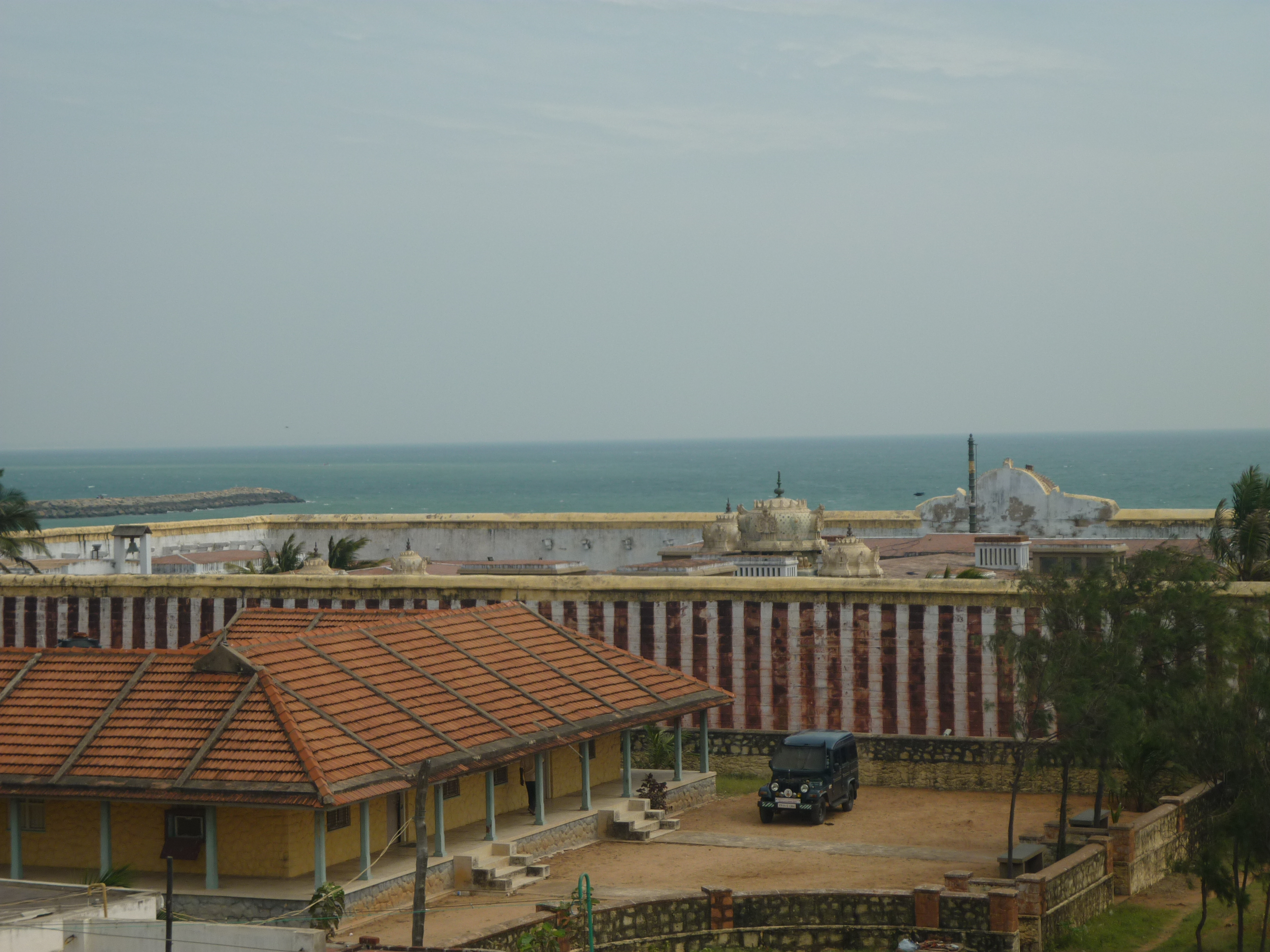
At the tip of India, where three oceans converge — the eternal virgin who waits at the southernmost point
The Epic Legend of Kanyakumari: The Eternal Virgin Who Guards the Nation
At the very southernmost tip of the Indian subcontinent, a divine warrior maiden waits eternally in her bridal finery — not out of sorrow, but out of cosmic purpose and invincible duty.
Part 1: The Demon's Curse and the Goddess's Mission
1. The Unstoppable Demon Banasura
The demon king Banasura had performed intense penance and received a powerful and seemingly impossible boon: he could only be killed by a virgin girl (kanya). Because no unmarried girl would ever be willing or powerful enough to face him, he believed himself immortal. Emboldened by this, he began terrorizing the universe, plundering heaven and earth.
The desperate gods, led by Brahma and Vishnu, prayed intensely to the Supreme Goddess, Parvati, begging her to incarnate specifically to destroy this demon and restore cosmic order.
2. Parvati Incarnates as Kanyakumari
Heeding their plea, the great Goddess Parvati descended to Earth, incarnating as Kanyakumari — the Divine Virgin Warrior. She chose the beautiful, sacred confluence of three oceans at the very tip of India as her divine seat and began her penance, preparing herself to annihilate the demon when the time was right.
However, Kanyakumari had one profound personal wish: she desperately wanted to marry Lord Shiva. She understood that this marriage must happen before she lost her virginity that was essential to defeating Banasura.
Part 2: Narada's Crucial Trick (The Wedding That Never Was)
3. The Divine Plan to Prevent the Marriage
The cunning sage Narada—a cosmic trickster but always for divine good—understood the terrifying truth: if Kanyakumari married Shiva, she would lose her power as a virgin goddess and Banasura could never be slain. He had to prevent this marriage at any cost, even if it meant the heartbreak of the Goddess herself.
4. The Auspicious Hour That Passed
Shiva had agreed to come to Kanyakumari for the wedding. A precise auspicious hour was set, grand preparations were made on both sides, and the entire universe waited. But Narada whispered urgently to Shiva that the auspicious time had unexpectedly passed and that proceeding now would be catastrophically inauspicious. Shiva, trusting the sage's cosmic wisdom, halted his journey mid-way at Vazhukkamparai.
The wedding never took place. Kanyakumari waited through the night. The vast feast prepared for the divine wedding — mountains of food, rice and vegetables — was never consumed. According to legend, it all crystallized overnight and turned into the uniquely colorful, multi-hued sand of Kanyakumari beach which you can still see today.
Part 3: The Demon's Doom and the Eternal Watch
5. Banasura's Defeat and Eternal Virginity
Tragically, even after Banasura was finally slain, Kanyakumari did not marry. The divine plan had its own completion, and she chose to remain a Nitya Kanya (Eternal Virgin), guarding the sacred point where three mighty oceans meet. Her eternal, unwavering presence here, in her bridal finery, protects the very tip of the Bharata Khanda — India's southern-most point.
Vivekananda himself, in 1892, meditated for three days on the rock just offshore facing this very temple, before traveling to Chicago for the 1893 Parliament of Religions — receiving his visionary call to transform India and the world.
Timeless Architecture

Kanyakumari Construction History: A Temple Older Than History
This temple's history stretches back to an age that predates most written records.
1. Pre-Historic Antiquity
Kanyakumari is mentioned in both the Mahabharata and the Ramayana, placing it firmly among India's most ancient and revered pilgrimage sites. The earliest known structure was likely a simple shrine built by the ancient Ay kings who historically controlled the southernmost territory of India.
2. Pandya and Chera Royal Patronage
Over the centuries, the temple received tremendous royal patronage from the Pandya and Chera dynasties, who significantly enlarged the complex and enriched it with gifts. The main sanctum's current Dravidian architectural style reflects this extended, multi-dynastic heritage of patronage.
3. The Temple by the Sea
The temple's unique coastal location at the precise confluence of three oceans meant it was constantly exposed to powerful seasonal storms and sea spray, requiring periodic renovation and reinforcement. In historic periods, the brilliant diamond nose ring of the Goddess commanded such extraordinary reverence that sailors could see it blazing from miles offshore at night.
4. The Famous Closed Eastern Door
The east-facing main door of the temple is famously kept closed during specified hours—specifically to prevent the dazzling diamond nose ring of the Goddess from blazing out across the water and misdirecting ships at sea. In earlier centuries before modern lighthouses, the gemstone's intense light was bright enough to disorient sailors navigating the treacherous confluence of three oceans. This unique architectural consideration makes Kanyakumari temple unlike any other in India.
Revealing the Mysteries
Discover the fascinating secrets and divine phenomena of this sacred temple
Where Three Oceans Meet: Kanyakumari is the world's only land-based confluence of three great water bodies — the Arabian Sea to the west, the Bay of Bengal to the east, and the Indian Ocean to the south. The three waters are visibly different colors.
The Blinding Diamond: The Goddess's iconic diamond nose ring is reportedly so extraordinarily brilliant that it has historically misdirected ships navigating the dangerous confluence at night, leading sailors to believe it was a lighthouse.
The Closed Door: The temple's east-facing main entrance is deliberately kept closed during specified hours solely to prevent the Goddess's diamond nose ring from misdirecting ships at sea — a uniquely practical architectural provision.
The Wedding Feast Became Beach Sand: According to legend, the vast feast prepared for the Goddess's cancelled wedding — mountains of rice and food — was never consumed and crystallized overnight, becoming the uniquely colorful, sparkling sand of Kanyakumari Beach, which locals still call 'Akshat' (uncooked sacred rice).
Vivekananda's Vision: In December 1892, Swami Vivekananda swam to the lone rock 500m offshore and meditated for three straight days, receiving his crystal-clear vision of India's spiritual destiny. He then sailed to Chicago for the 1893 Parliament of Religions, which changed history.
The Twin Celestial Spectacle: Only on April 1st each year can you witness the sun setting and the full moon rising simultaneously from opposite horizons — a breathtaking celestial phenomenon unique to this specific geographic point.
Thiruvalluvar's 133-Foot Colossus: The majestic 133-foot tall stone statue of Tamil poet-philosopher Thiruvalluvar stands prominently on a separate rocky islet nearby, representing the 133 chapters of the Tirukkural, Tamil civilization's supreme literary masterpiece.
✨ Each mystery reveals the divine presence within these sacred walls ✨
Explore More Sacred Stories
Discover the legends and mysteries of India's ancient temples
View All Stories