
The Temple
Kamakshi Amman Temple in Kanchipuram, Tamil Nadu, houses one of the most remarkably unique forms of the Goddess in all of India. Unlike most Shakti Peethas where the Goddess is fierce or energetic, Kamakshi sits in the Padmasana posture in supreme, blissful meditation — holding a sugarcane bow and flower arrows. Kanchipuram is one of India's seven sacred cities (Sapta Puri — the seven cities that grant moksha). The city itself is called the "City of 1,000 Temples." The presiding deity at Kamakshi represents the Goddess in her most compassionate, motherly aspect — she desires (kama) the welfare of her devotees (her eyes filled with this divine desire = kamakshi). The great philosopher-saint Adi Shankaracharya is intimately connected with this temple — he is said to have tamed the Goddess's fierce, unstable energy and installed a Sri Chakra, transforming her manifestation into one of serene grace.
The Sacred Story

In serene meditation on the Sri Chakra — where Adi Shankaracharya tamed the supreme power of the Goddess
The Epic Legend of Kamakshi Amman: The Taming of the Goddess
In Kanchipuram, the fierce, uncontrollable energy of the Divine Mother was famously transformed into an ocean of profound peace and maternal grace.
Part 1: Mythological Origins (Parvati's Penance)
1. The Sand Shiva Lingam
The core legend of Kamakshi dates back to the time before Goddess Parvati's marriage to Lord Shiva. Determined to win Shiva as her eternal husband, Goddess Parvati retreated to the holy city of Kanchipuram. Selecting a spot beneath a sacred, ancient mango tree, she sculpted a Shivalingam entirely out of river sand (the Prithvi Lingam, marking Kanchipuram as the Earth element among the Pancha Bhoota Sthalas). There, she engaged in incredibly fierce, unwavering Tapas (austerities).
2. The Flood and the Embrace
To thoroughly test her uncompromising devotion, Lord Shiva sent a massive, raging flood down the nearby Vegavathi River, threatening to completely wash away the fragile sand Lingam. Unafraid for her own life, Parvati tightly embraced the sand Lingam to her chest, protecting it from the rushing waters. Deeply moved by her purest devotion, Lord Shiva manifested before her and joyously agreed to marry her. Because she embraced the Lord tightly, the Lingam still bears the marks of her bangles.
Part 2: The Tantric Intervention of Adi Shankara
3. The Fierce, Destructive Form (Ugra Swaroopam)
Centuries later, the temple's dynamic energy shifted dramatically. According to legend, the Goddess here had assumed an incredibly fierce, terrifying, and unstable form known as Ugra Swaroopam. Her uncontrollable cosmic energy was reportedly causing massive, chaotic disturbances and fear throughout the Kanchipuram region.
4. The Taming via the Sri Chakra
The legendary 8th-century philosopher-saint, Adi Shankaracharya, arrived in Kanchipuram and perceived this frightening imbalance. Masterfully utilizing his supreme knowledge of Sri Vidya (esoteric Tantric mantras), Shankaracharya engaged the Goddess.
Directly in front of the deity, he miraculously installed a powerful geometric, highly mystic device—the Sri Chakra Yantra. This massive, intricate spiritual "battery" efficiently channeled, absorbed, and completely calmed the Goddess's terrifyingly destructive energy, instantly transforming her manifestation into one of supreme, smiling, blissful serenity. Since that day, she sits beautifully in the lotus posture (Padmasana), affectionately radiating immense maternal grace, holding a sweet sugarcane bow and fragrant floral arrows.
Timeless Architecture

Kamakshi Construction History: The Jewel of the 1,000-Temple City
Kanchipuram, often referred to as the 'City of 1,000 Temples', features Kamakshi Amman uniquely at its dead center—literally and spiritually.
1. Pallava Origins and Chola Expansions
While the sacred site is ancient, the earliest recorded massive stone construction of the Kamakshi Amman Temple is widely attributed to the powerful Pallava kings in the 6th century CE. Over the subsequent centuries, the mighty Chola dynasty massively expanded the temple, adding intricate, deeply carved stonework and sprawling courtyards that stand today.
2. Classic Dravidian Grandeur
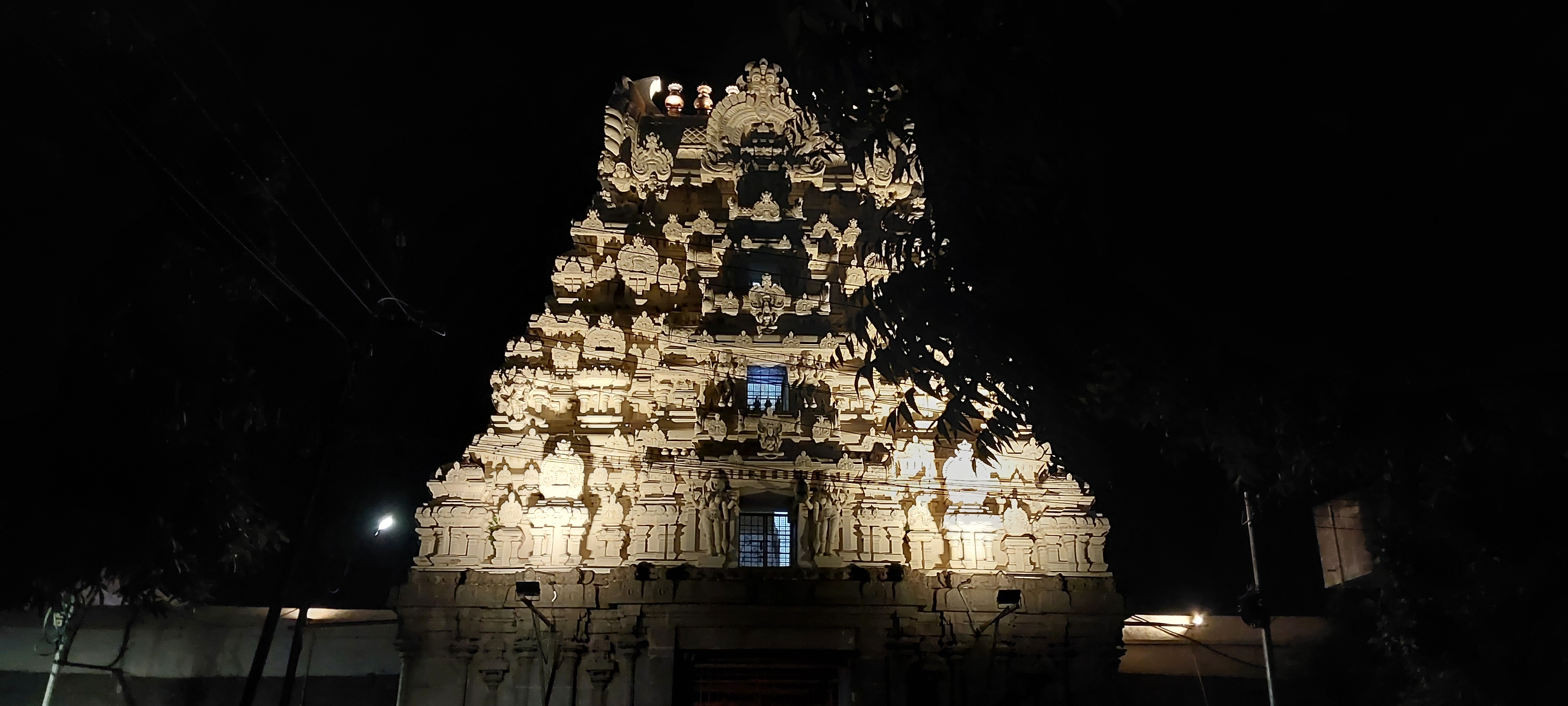
The massive temple complex spans over 5 sweeping acres. It is a spectacular masterpiece of majestic Dravidian temple architecture. It prominently features four phenomenally tall, towering Rajagopurams (gateway towers) facing all four cardinal directions, intricately decorated with thousands of brightly painted stucco figures. The temple also features a massive, ornately pillared mandapam with 100 intricately carved monolithic stone pillars.
3. The Golden Vimanam
Immediately eye-catching inside the complex is the spectacular Vimanam (the central tower directly over the main sanctum sanctorum). Unlike the massive stone gateway towers, the sanctum's tower is completely enveloped in blindingly brilliant sheets of solid gold, reflecting the dazzling sun across the temple courtyard.
4. The Kanchi Kamakoti Peetham
The temple maintains profound, unbroken historical ties with the Kanchi Kamakoti Peetham, the venerable Hindu monastic institution proudly established by Adi Shankaracharya himself in 482 BCE. To this day, the highly respected spiritual descendants of Shankaracharya strictly oversee the temple's incredibly elaborate, ancient daily rituals.
Revealing the Mysteries
Discover the fascinating secrets and divine phenomena of this sacred temple
The Peaceful Goddess: In almost all major Shakti Peethas, the Goddess stands in a fierce, dynamic posture. Uniquely, Kamakshi Amman sits calmly in the Padmasana (lotus) posture, deep in blissful meditation.
The Energy Tamer: The great Hindu saint Adi Shankaracharya personally installed the mystic geometric Sri Chakra here, which famously absorbed and pacified the Goddess’s terrifying, destructive energy.
City of Liberation: Kanchipuram is revered as one of the elite 'Sapta Puri'—the seven holy cities in India that are guaranteed to bless devotees with Moksha (spiritual liberation).
Meaning of Her Name: The name literally translates beautifully: 'Kama' (desires/love) + 'Akshi' (eyes). She is the supreme mother whose very eyes fulfill the greatest desires of her devotees.
The Sacred Mango Tree: Inside the temple stands a revered mango tree, uniquely yielding four distincly different varieties of mangoes representing the four ancient Vedas.
The Central Axis: Kanchipuram is packed with hundreds of temples, but uniquely, all Shiva temples in the city face directly toward the Kamakshi Amman temple, signifying her central, supreme authority.
The Goddess of the Bow: Instead of frightening weapons like swords or severed heads, she affectionately holds a sweet sugarcane bow and a bouquet of five fragrant floral arrows.
✨ Each mystery reveals the divine presence within these sacred walls ✨
Explore More Sacred Stories
Discover the legends and mysteries of India's ancient temples
View All Stories